How to Read a Roofing Estimate (Tampa Edition)
A practical, line-by-line guide to roofing estimates for Tampa homeowners. Learn what should be included, what red flags to watch for, and how to compare bids on equal terms.
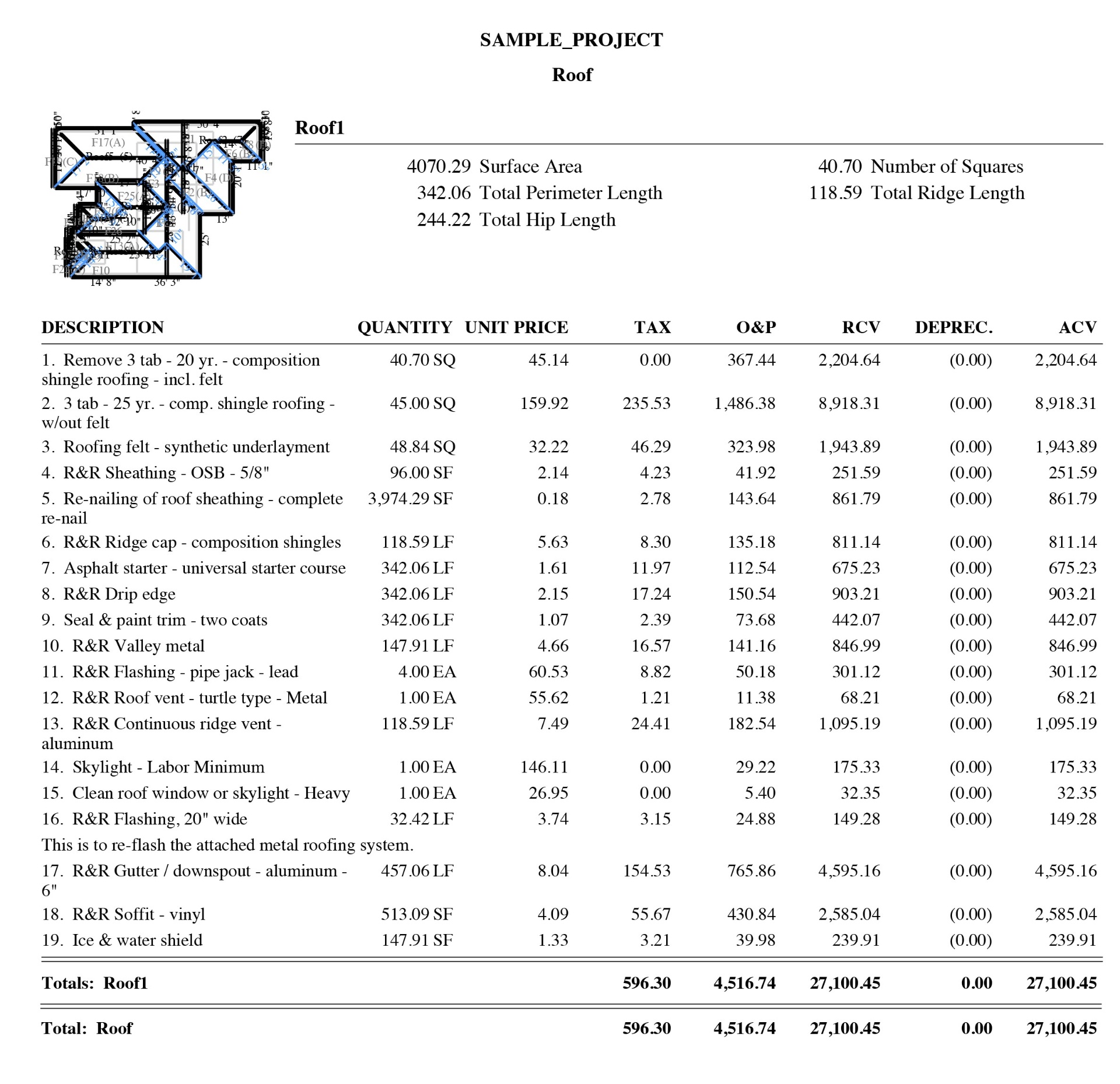
If you have two or three roofing estimates sitting on your kitchen table and the prices are wildly different, you are not alone. Most Tampa homeowners receive bids that vary by thousands of dollars for what looks like the same job. The difference is rarely random. It is almost always hiding in the line items.
Understanding what belongs on a roofing estimate, and what is missing, is the single most useful skill you can bring to the buying process. This guide walks through every section a complete Tampa estimate should contain, what each item actually means, and how to spot a bid that will cost you more after the contract is signed.
What Should Be Included in a Roofing Estimate
A complete estimate is a written scope of work, not just a price. At minimum, it should list:
- Materials. Brand, product line, color, and quantity for shingles, underlayment, drip edge, ridge cap, ventilation, and pipe boots.
- Labor. The crew responsible, the install method, and any code-required upgrades being performed.
- Tear-off. Number of layers being removed and how the deck will be inspected after.
- Disposal. Dumpster size, hauling, and cleanup including magnetic nail sweep.
- Permits. Hillsborough County or City of Tampa permit fees and the contractor pulling the permit under their license.
- Warranty terms. Manufacturer coverage and contractor workmanship coverage in writing.
If any of these are missing or summarized as a single lump sum, you do not have an estimate you can compare. You have a price tag.
Key Components Explained
Shingles
The estimate should name the manufacturer (GAF, Owens Corning, Atlas, Malarkey), the specific product line (such as Timberline HDZ or Duration), the color, and the wind rating. In Tampa, a 130 mph rating is the practical minimum; many products are rated to 150 mph when installed with the manufacturer's enhanced nailing pattern. If wind rating is not stated, ask.
Underlayment
Florida Building Code requires a sealed roof deck assembly on most replacements. The estimate should specify either a self-adhered membrane (peel-and-stick) over the entire deck, or two layers of mechanically fastened synthetic with taped seams. "Felt" or "30-pound paper" alone does not meet current code on most Tampa projects.
Flashing
New flashing should be installed at every wall, chimney, skylight, and valley. Reusing old flashing is a common cost-cutting move that fails early. Look for line items naming step flashing, counter flashing, valley metal, and pipe boot replacement.
Ventilation
A balanced system has roughly equal intake (soffit) and exhaust (ridge or off-ridge vents). The estimate should state the type and linear feet of ridge vent or count of off-ridge vents. Mixing power vents with passive vents in the same roof plane usually short-circuits airflow and should be flagged.
Red Flags in Roofing Estimates
- Vague descriptions. "Install new roof" without product names, quantities, or accessories.
- Missing scope items. No mention of underlayment type, flashing replacement, or ventilation.
- Unusually low pricing. A bid 25 percent or more below the others almost always means missing scope, builder-grade materials, uninsured labor, or change orders waiting to happen.
- No warranty details. "Lifetime warranty" with no manufacturer name, no certification level, and no workmanship terms is marketing language, not coverage.
- No permit line. A contractor offering to skip the permit is putting your insurance, resale, and personal liability at risk.
- Large upfront deposits. Florida law caps roofing deposits, and reputable contractors typically collect 10 to 25 percent before material drop.
Tampa-Specific Considerations
Tampa sits in a 150 mph ultimate wind design zone under the 7th Edition Florida Building Code. That has real implications for your estimate:
- Sealed roof deck. Required on most replacements, either self-adhered membrane or taped synthetic underlayment.
- Enhanced nailing. Re-nailing the existing deck to current attachment standards is required when more than a defined percentage of the roof is replaced.
- Drip edge and starter strip. Both are code-required and should appear as separate line items.
- Wind mitigation documentation. A reputable contractor will note that the new assembly qualifies for an updated wind mitigation inspection, which often lowers homeowners insurance premiums.
Authoritative Source: IBHS FORTIFIED Roof Standards
The Insurance Institute for Business and Home Safety (IBHS) publishes the FORTIFIED Roof standard, the most rigorous independent benchmark for roof performance in hurricane-prone regions. FORTIFIED requires a sealed roof deck, enhanced edge metal, ring-shank nails on the deck, and impact-rated accessories. Roofs built to this standard have demonstrated dramatically lower failure rates in post-storm field studies, and several Florida insurers offer premium credits for FORTIFIED designation.
Even if you do not pursue formal certification, asking your contractor whether the proposed scope meets FORTIFIED standards is one of the fastest ways to separate quality bids from cheap ones.
How to Compare Multiple Estimates
To compare bids apples-to-apples, line them up side by side and check that all three answer the same questions:
- Same shingle brand, product line, and wind rating?
- Same underlayment system (peel-and-stick vs. synthetic)?
- Same flashing replacement scope?
- Same ventilation type and quantity?
- Same per-sheet decking replacement allowance (typically $75 to $125 per sheet in Tampa)?
- Same warranty tier (Standard, System Plus, Silver Pledge, Golden Pledge for GAF, for example)?
- Same permit handling and final inspection responsibility?
If any column is blank, ask the contractor to revise the bid before comparing prices.
Choosing the Right Contractor
Once the scopes match, price becomes meaningful. Choose the contractor who:
- Holds an active Florida CCC or CGC license verifiable on the DBPR website.
- Carries general liability and workers' compensation insurance, with certificates issued directly to you by the carrier.
- Is a manufacturer-certified installer, which unlocks the strongest warranty tiers.
- Provides a written, itemized scope you can hand to any other contractor and get the same job back.
The most expensive mistake in roofing is not overpaying by a few hundred dollars; it is paying twice because the first job missed code, voided the warranty, or used the wrong underlayment.
Related Reading
For deeper context on materials and contractor selection, see our Roof Replacement Tampa page, the Roofing Materials Florida guide, and our local Roof Replacement Westchase page.
Get a Quote Review
If you have estimates in hand and want a second set of eyes, Weathershield will review them line by line at no charge and tell you exactly what is missing, what is overpriced, and what looks right. Call (813) 492-6940 or schedule a consultation through our contact page.
Frequently Asked Questions
Explore Our Services, Guides & Tampa Bay Locations
We provide roofing, impact windows, siding, and storm restoration throughout Tampa Bay. Explore our services, homeowner guides, and local service areas below.
Exterior Services
Licensed exterior solutions built for Florida's climate and building codes.
Homeowner Guides
In-depth resources on materials, costs, and insurance for Florida homeowners.
Tampa Bay Service Areas
Serving homeowners across Hillsborough and Pinellas counties.
More Articles for Tampa Homeowners
4-Point Inspection Repairs: What Homeowners Need to Fix
A failed 4-point inspection can stall your insurance, sale, or refinance. Here is what fails most often in Tampa and how to fix it quickly.
May 15, 2026
What Realtors Look for in a Roof Inspection in Tampa
Roof inspection reports drive Tampa real estate transactions. Here is what realtors look for, what kills deals, and how to prepare your roof before listing.
May 13, 2026
How Roof Condition Affects Home Value in Tampa
Roof condition is one of the first things Tampa buyers, inspectors, and insurers evaluate. Here is how it shapes your sale price and what to do before you list.
May 11, 2026