If your Tampa Bay home has been damaged by a hurricane, severe thunderstorm, or hail event, you're facing two simultaneous challenges: protecting your home from further damage and navigating the insurance claims process. This guide walks you through both, clearly and honestly, from the perspective of a contractor who has helped hundreds of Tampa homeowners through exactly this situation.
The insurance claims process in Florida has become increasingly complex. Carriers are tightening underwriting, adjusters are under pressure to minimize payouts, and the legislative landscape keeps shifting. Understanding how the process works, and your rights within it, is essential to getting your home properly repaired without paying out-of-pocket for damage that should be covered.
Related Resources:
How This Applies to Tampa Bay Homeowners
Tampa Bay sits in one of Florida's most hurricane-vulnerable corridors. The Gulf of Mexico's warm waters fuel rapid storm intensification, and the Bay's geography funnels storm surge directly into coastal communities from Clearwater to Apollo Beach. Even tropical storms that don't make direct landfall regularly produce 60 to 80 mph gusts that damage roofs, siding, and fencing across Hillsborough and Pinellas counties.
The insurance landscape for Tampa Bay homeowners has become especially challenging. Several major carriers have pulled out of the Florida market, premiums have increased 30 to 50% over the past three years, and underwriting standards are stricter than ever. This makes proper documentation and prompt claim filing even more critical for Tampa homeowners. A delayed or poorly documented claim is more likely to be disputed or underpaid.
Post-storm, Tampa Bay also attracts storm chasers from out of state, contractors who flood the area after major events, sign homeowners to contracts, and then deliver substandard work or disappear. Knowing how to verify a contractor's credentials and avoid common scams is essential. A Tampa roof inspection from a locally established company is the safest first step after any storm.
Immediately After the Storm: What to Do First
The first 48 hours after storm damage are critical, both for protecting your home and building a strong insurance claim. Here's your priority checklist:
Safety First
- Do NOT climb on a damaged roof under any circumstances
- Avoid areas with downed power lines — call the utility company
- If structural damage is severe, evacuate until a professional assesses safety
- Watch for standing water near electrical systems
- Use generators outdoors only — never inside or in an enclosed garage
Document Everything
- ☐ Take extensive photos and videos of ALL exterior damage — from multiple angles
- ☐ Photograph interior damage: water stains, wet floors, damaged belongings
- ☐ Video walkthrough of the entire property — exterior and interior
- ☐ Document the date and approximate time of the storm
- ☐ Note any emergency services called (fire, police, utility)
- ☐ Save weather reports and storm notifications for the event date
- ☐ Create an inventory of damaged personal property with approximate values
Prevent Further Damage
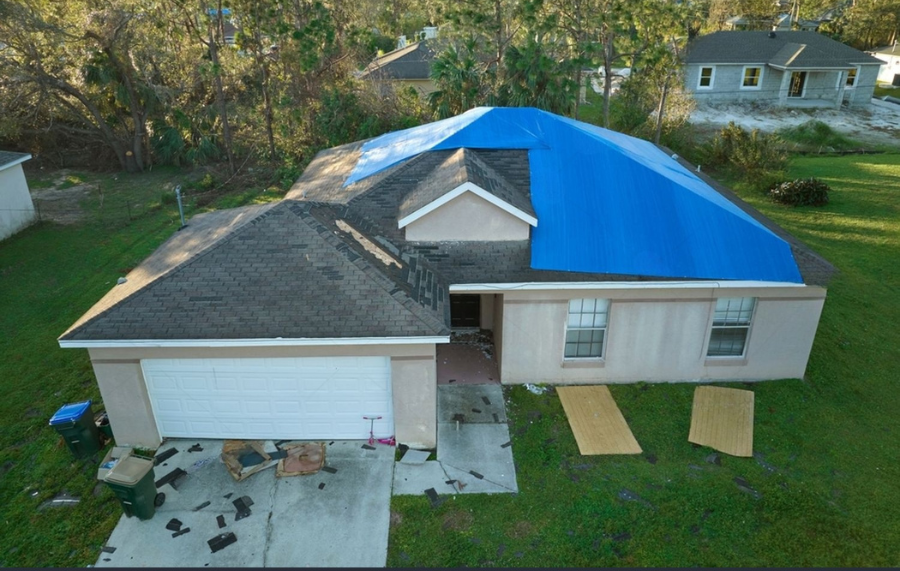
Florida insurance policies require you to take reasonable steps to prevent further damage — this is called your "duty to mitigate." Failure to mitigate can reduce or void your claim. Reasonable mitigation includes:
- Emergency tarping of exposed roof areas
- Boarding up broken windows or doors
- Water extraction from flooded areas
- Removing fallen trees from structures (if safe to do so)
Keep all receipts. Emergency mitigation expenses are typically covered under your claim.
Need Emergency Storm Response?
Talk to a licensed Tampa Bay contractor — no obligation, no pressure.
Types of Storm Damage: What Adjusters Look For
Understanding the different types of storm damage helps you document properly and communicate effectively with your adjuster and contractor.
Wind Damage
Wind damage is the most common storm damage in Tampa Bay. It includes lifted, creased, or missing shingles; damaged flashing; displaced ridge caps; and broken tiles. Wind damage typically follows a pattern aligned with the storm's direction and is concentrated on windward-facing roof slopes.
What adjusters look for: Pattern consistency (damage aligned with wind direction), crease marks on shingle tabs, exposed underlayment, damaged or displaced components matching storm date.
Hail Damage
Hail damage creates random-pattern impact marks across roof surfaces. On shingles, look for circular dents that expose the black fiberglass mat beneath granules. On metal components (flashing, vents, gutters), look for dents and dimples. Hail damage is often subtle and requires roof-top inspection to identify.
What adjusters look for: Random pattern (not aligned with a direction), impact marks on soft metals (gutters, vents), ground-level evidence (damage to cars, fences, outdoor items), hail size reports from the National Weather Service.
Hurricane Damage
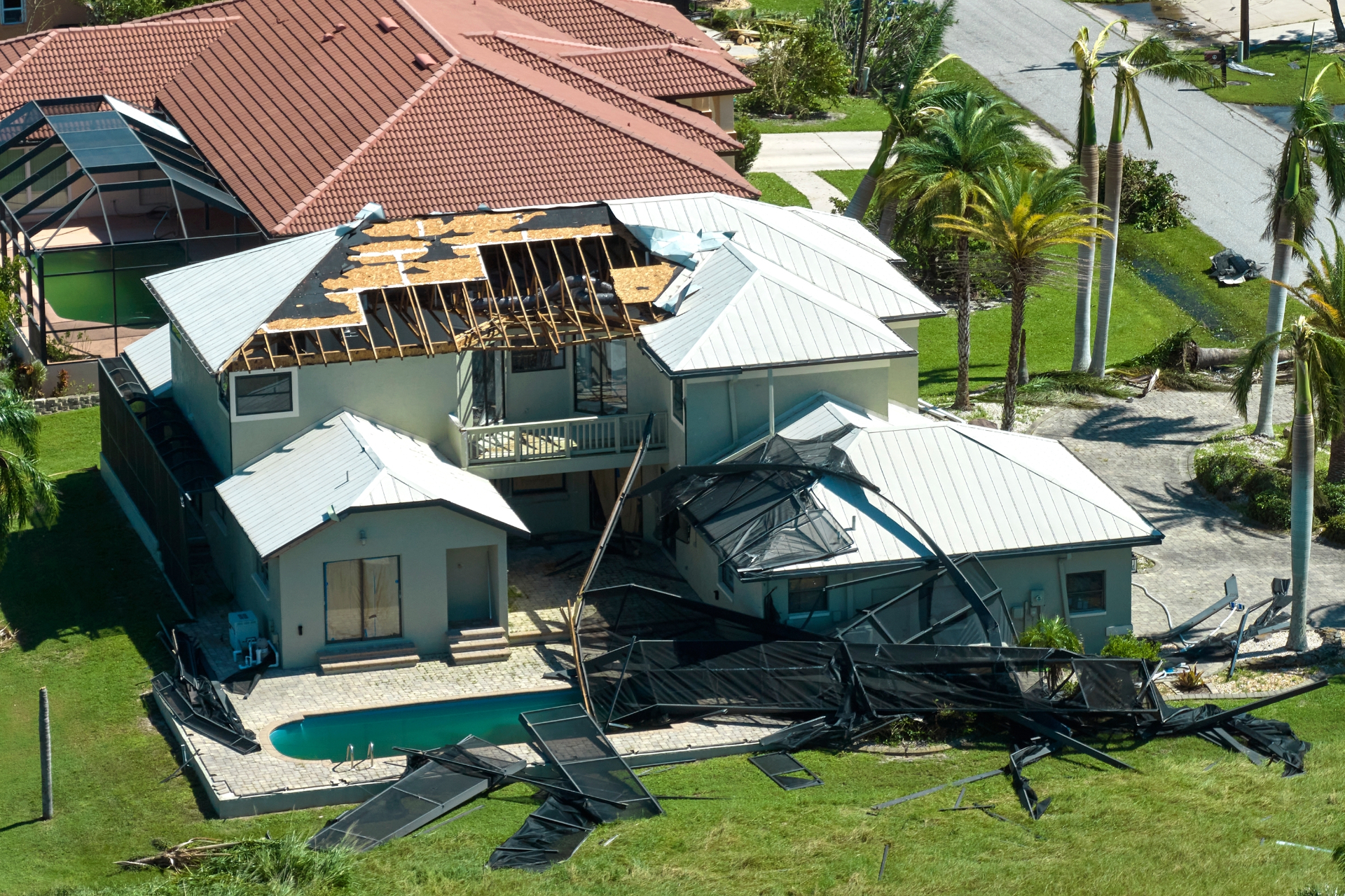
Hurricane damage can include all of the above at extreme levels, plus structural damage, water intrusion from wind-driven rain, debris impact damage, and tree/limb falls. Hurricane claims use a separate (usually higher) deductible than standard storm claims.
Important distinction: A hurricane deductible only applies when the National Hurricane Center declares a named hurricane. Tropical storms and severe thunderstorms use your standard "all other perils" deductible — which is typically much lower.
Water Damage (Secondary)
Water damage that results from storm damage to your roof or exterior is covered under your storm claim. This includes drywall damage, insulation damage, flooring damage, and mold resulting from the water intrusion. Document all interior water damage thoroughly — it's part of your claim.
The Insurance Claim Process: Step by Step
Step 1: File Your Claim Promptly
Contact your insurance company within 48 hours of discovering storm damage. You can typically file by phone or through your carrier's app/website. Record your claim number, the representative's name, and the date of filing.
Step 2: Get a Professional Contractor Inspection
Before the adjuster visits, have a licensed roofing contractor inspect your property. This gives you an independent assessment of the damage scope, estimated repair costs, and documentation that can be compared to the adjuster's findings. Tampa homeowners can review our roofing evaluation and project services before requesting an inspection.
Step 3: The Adjuster Inspection
Your insurance company sends an adjuster to inspect the damage. This is the most critical step in determining your claim payout. Key points:
- Have your contractor present. This is standard and expected. Your contractor identifies damage the adjuster might miss.
- Walk the property together. Ensure the adjuster sees every area of damage — roof, exterior walls, gutters, interior water damage.
- Take your own photos during the inspection in addition to the adjuster's documentation.
- Ask questions. If the adjuster dismisses damage, ask them to document their reasoning.
- Don't sign anything beyond acknowledging the inspection occurred.
Step 4: Review the Adjuster's Estimate
You'll receive a written estimate from your insurance company detailing what they'll cover. Compare this line-by-line with your contractor's estimate. Common discrepancies include:
- Missed damage areas
- Insufficient quantities (fewer squares of roofing than needed)
- Missing code upgrade costs
- Below-market labor and material pricing
- Excluded items that should be covered
Step 5: Supplement if Needed
If the adjuster's estimate doesn't cover the full scope of necessary repairs, your contractor submits additional documentation supporting the need for items or quantities not in the original estimate. Our replacement pricing guide explains how WCS handles supplemental work and concealed conditions.
Step 6: Approve Repairs & Schedule
Once the claim is approved at an acceptable amount, authorize your contractor to begin work. Review the contract carefully — it should detail scope, materials, timeline, and payment schedule.
Step 7: Completion & Final Payment
After repairs are completed, you (or your contractor) submit proof of completion to the insurance company to release the final payment, including any recoverable depreciation being held back.
Claim Process Timeline
Note: Timelines vary significantly. After major hurricanes, every step takes longer due to volume.
| Phase | Typical Duration | Notes |
|---|---|---|
| File claim | Day 1–2 | Within 48 hours of storm |
| Contractor inspection | Day 1–7 | Before adjuster if possible |
| Adjuster inspection | Week 1–4 | Longer after major hurricanes |
| Estimate received | Week 2–6 | From insurance company |
| Supplement (if needed) | Week 3–8 | Response time varies by carrier |
| Approval & scheduling | Week 4–10 | Depends on material availability |
| Repair/replacement | 1–5 days | Once started |
| Final inspection & payment | Week 6–14 | After completion |
Need Help With Your Storm Claim?
Talk to a licensed Tampa Bay contractor — no obligation, no pressure.
Understanding Your Florida Deductibles
Florida homeowner's insurance policies have a uniquely complex deductible structure that confuses many homeowners:
Hurricane Deductible
Applied ONLY when damage results from a named hurricane (declared by the National Hurricane Center). This deductible is typically a percentage of your dwelling coverage — usually 2%, 5%, or 10%.
Example: If your home is insured for $300,000 with a 2% hurricane deductible, you pay the first $6,000 of hurricane damage repairs. With a 5% deductible, you'd pay $15,000.
"All Other Perils" Deductible
Applied to non-hurricane claims — thunderstorm wind, hail, fire, falling trees, etc. This is typically a flat dollar amount: $1,000, $2,500, or $5,000. This deductible applies to the majority of storm claims in Tampa Bay, since most damaging storms are thunderstorms, not named hurricanes.
Pro tip: Review your policy declarations page annually. Understand both deductible amounts before storm season. Many homeowners are shocked to learn their hurricane deductible is $10,000–$15,000+ when they assumed it was $1,000.
Common Claim Denial Reasons (And How to Fight Them)
1. "Pre-existing Damage"
Adjusters may attribute damage to wear and aging rather than the storm event. Counter: Provide before-storm photos (Google Earth historical images work), maintenance records, or a contractor's assessment distinguishing storm damage from wear patterns.
2. "Maintenance Issue"
Insurance does not cover damage resulting from lack of maintenance. However, a well-maintained roof that sustains storm damage IS covered. Counter: Document regular maintenance and prior repairs. Show that the damage pattern is consistent with storm impact, not neglect.
3. "Cosmetic Damage Only"
Some policies have cosmetic damage exclusions, particularly for metal roofs and some tile products. Counter: Have your contractor document functional damage — compromised seal strips, reduced wind resistance, exposed substrate — that goes beyond cosmetic appearance.
4. "Below Deductible"
The adjuster's estimate comes in below your deductible, meaning no payout. Counter: Review the estimate line-by-line with your contractor. Often, missed items or incorrect quantities bring the total above the deductible when properly documented.
5. Late Filing
Filing after the statutory deadline (currently 2 years in Florida). Prevention: File promptly. There is no advantage to waiting. File within days, not months.
Your Dispute Options
- Re-inspection: Request a second adjuster inspection with your contractor present
- Appraisal process: Each party hires an appraiser; a neutral umpire breaks ties. This is outlined in your policy.
- Florida Department of Financial Services mediation: Free mediation program for disputed claims
- Insurance attorney: For significant claim disputes, an attorney specializing in property insurance can be effective. Most work on contingency.
Claim Denied or Underpaid?
Talk to a licensed Tampa Bay contractor — no obligation, no pressure.
Warning: How to Identify Storm Chasers
After every hurricane and major storm, Tampa Bay is flooded with out-of-state contractors — commonly called "storm chasers" — who arrive to capitalize on the surge in demand. While some are legitimate, many are not. Here's how to protect yourself:
Red Flags
- Door-to-door canvassing immediately after storms — especially with out-of-state plates
- "Free roof" promises — nothing is free; they're planning to inflate your insurance claim
- "We'll cover your deductible" — this is insurance fraud under Florida law
- Pressure to sign an AOB (Assignment of Benefits) — this transfers your claim rights to them
- No local physical address — they're working from a hotel room or temporary office
- Cannot provide a Florida contractor license number — verify at myfloridalicense.com
- Demand for large upfront payments — reputable contractors don't require full payment before work
- No written contract with detailed scope, timeline, and warranty
- Pressure to decide immediately — "this price is only good today"
What Happens When You Hire a Storm Chaser
Common outcomes: substandard work that fails at the next storm, inflated insurance claims that can constitute fraud (for which YOU are liable), abandoned projects when they move to the next storm zone, no valid warranty when problems emerge, and no recourse because they're in another state.
How Legitimate Contractors Work With Insurance
A reputable contractor should serve as your advocate throughout the claims process — not as a replacement for it. Here's how we work with insurance companies at Weathershield:
- Free storm damage inspection: We assess your roof independently and document all damage with detailed photos.
- Adjuster meeting: We attend the adjuster's inspection and walk the roof together, pointing out all damage areas.
- Estimate comparison: We review the adjuster's estimate against our scope and identify discrepancies.
- Supplement preparation: When damage is missed or undervalued, we prepare and submit professional supplements with documentation.
- No AOB: You maintain control of your claim. We don't ask you to sign over your rights.
- No deductible fraud: We never offer to "cover" or "waive" your deductible.
- Transparent pricing: Our pricing is competitive and fair — we don't inflate costs to match inflated insurance estimates.
Legal & Permit Requirements for Storm Repairs
Florida law and local building codes apply to storm damage repairs just as they do to any other construction work:
- Building permits: Required for roof replacement, major structural repairs, window replacement, and significant exterior work.
- Licensed contractor: All work must be performed by a Florida-licensed contractor. Verify at myfloridalicense.com.
- Code compliance: Repairs must meet current Florida Building Code — which may require upgrades beyond what existed previously (this is called "code upgrade" and should be covered by your insurance).
- Inspections: Permitted work is inspected by the local building department to verify code compliance.
- Workers' compensation: Your contractor must carry workers' comp insurance. If they don't, YOU may be liable for worker injuries on your property.
Complete Storm Damage Checklist for Tampa Homeowners
Immediately After the Storm
- ☐ Ensure family safety — evacuate if structural damage is severe
- ☐ Document all damage with photos and video
- ☐ Cover exposed areas to prevent further water damage
- ☐ File insurance claim within 48 hours
- ☐ Record claim number and adjuster contact info
- ☐ Contact a licensed local contractor for inspection
Before the Adjuster Visit
- ☐ Have your contractor inspect and document damage
- ☐ Organize your damage photos chronologically
- ☐ List all affected areas (roof, exterior, interior, personal property)
- ☐ Schedule contractor to be present during adjuster visit
During the Claims Process
- ☐ Compare adjuster estimate to contractor estimate line-by-line
- ☐ Request supplements for missed or undervalued items
- ☐ Keep copies of ALL correspondence with insurance company
- ☐ Do not authorize permanent repairs until claim is approved
- ☐ Verify contractor's license, insurance, and local presence
After Repairs
- ☐ Obtain copies of building permit and passed inspection
- ☐ Receive written warranty documentation
- ☐ Submit completion documentation to insurance for final payment
- ☐ Schedule updated wind mitigation inspection (if new roof)
- ☐ Update your insurance agent with completed improvements
What We Recommend for Homes in Tampa
Based on years of helping Tampa Bay homeowners through storm recovery, here are our core recommendations:
- File your claim immediately: Don't wait days or weeks. Contact your insurance carrier within 24 to 48 hours of the storm event. Florida law gives you two years, but delays work against you.
- Get a contractor inspection before the adjuster arrives: A professional Tampa roof inspection gives you a detailed scope of damage so you can compare it line-by-line against the adjuster's estimate.
- Use the claim as an opportunity to upgrade: If your roof needs replacement, combine the insurance-funded work with upgrades like sealed-deck underlayment, hurricane straps, and impact windows in Tampa for maximum wind mitigation savings going forward.
- Always verify contractor credentials: Check Florida licenses at myfloridalicense.com, confirm a local physical address, read Google reviews, and never sign an Assignment of Benefits (AOB).
- Plan for the next storm: After repairs are complete, schedule a wind mitigation inspection and update your roofing, siding, and opening protection to reduce future vulnerability and insurance costs.
Get Expert Help for Your Tampa Home
If you're unsure what option is right for your home, our team can help you evaluate your roof, windows, or siding. We provide honest assessments with no obligation and no pressure.
We're Here When the Storm Hits
Storm damage is stressful. The insurance process is frustrating. Choosing the right contractor feels overwhelming. At Weathershield Construction, we've guided hundreds of Tampa Bay homeowners through exactly this process — from emergency tarping through final inspection and insurance payment.
We don't use AOB agreements. We don't promise free roofs. We don't cover deductibles. What we do is show up, tell you the truth about your roof, do excellent work, and make the insurance process as smooth as possible. That's it. That's always been enough.
Serving Tampa, Brandon, Clearwater, St. Petersburg, and all of Tampa Bay. Call us when you need us.
For additional roofing education after the immediate claim questions are resolved, visit our roofing resource center.