
Replacing your roof is one of the most significant investments you'll make as a Tampa Bay homeowner. Between Florida's hurricane seasons, intense UV exposure, and afternoon thunderstorms, your roof takes a beating that most homeowners in other states simply don't experience. This guide covers everything you need to make a confident, informed decision, from understanding when replacement is necessary to navigating insurance claims and choosing the right materials for our climate.
At Weathershield Construction, we've replaced hundreds of roofs across Tampa, Brandon, Clearwater, and the surrounding communities. This guide reflects what we've learned working with real homeowners, real insurance companies, and real Florida weather. No filler. No sales tactics. Just the information you need. If you're considering bundling your roof with siding, windows, or other upgrades, see our whole-home exterior renovation in Tampa service for permit-stacked, single-project pricing.
Related Resources:
How This Applies to Tampa Bay Homeowners
Tampa Bay sits in one of Florida's most active storm corridors, and the combination of year-round heat, afternoon thunderstorms, and hurricane exposure makes roof replacement a different conversation here than in most of the country. Surface temperatures on a Tampa roof can exceed 160°F in summer, accelerating shingle aging far beyond what manufacturers test for in northern climates.
Humidity is another factor that catches homeowners off guard. Tampa's average relative humidity hovers around 75%, which promotes moisture buildup in attic spaces and accelerates decking deterioration, especially on older homes without proper ventilation. Add in the insurance pressure that comes with owning a home in a high-wind zone, and Tampa roof replacement is as much an insurance strategy as it is a structural one.
If your home is in Carrollwood, Brandon, or the Westchase corridor, you're likely dealing with roofs originally installed in the late '90s or early 2000s. Many of those are now 20+ years old and approaching the point where insurance carriers will non-renew the policy unless the roof is replaced.
When Should You Replace Your Roof?
Not every roof problem requires full replacement. But knowing the difference between a repairable issue and a roof that's reached the end of its useful life can save you thousands and prevent a catastrophic failure during the next hurricane.
Signs Your Roof Needs Replacement
- Age: Asphalt shingles in Florida typically last 15–20 years (less than the 25–30 year rating due to our UV and heat exposure). If your roof is approaching 20 years, it's time for an inspection.
- Widespread granule loss: Check your gutters. Excessive granules mean your shingles are deteriorating and losing their protective coating.
- Multiple active leaks: One leak can be patched. Three or four leaks across different areas usually indicate systemic failure.
- Sagging or soft spots: This indicates decking damage, meaning the structural plywood beneath your shingles is rotting or compromised.
- Storm damage affecting 30%+ of the roof: If a hurricane or severe storm damaged a significant portion, replacement is usually more cost-effective than extensive repair.
- Visible daylight through the attic: If you can see light coming through your roof boards, moisture is getting in too.
- Mold or moisture in the attic: Persistent moisture issues despite adequate ventilation often point to roof failure.
Repair vs. Replace: Making the Right Call
Our general rule: if repair costs exceed 30–40% of replacement cost, or if your roof is within 5 years of its expected lifespan, replacement delivers better long-term value. A new roof also provides a new warranty, improved energy efficiency, and often a significant insurance premium reduction through wind mitigation credits.
Not Sure If You Need a Replacement?
Talk to a licensed Tampa Bay contractor — no obligation, no pressure.
Roof Replacement Costs in Tampa: What to Expect
Roof replacement costs in Tampa vary significantly based on several factors. Anyone quoting you a price without seeing your roof is guessing. Here's what actually drives your cost:
Our replacement pricing guide explains how WCS documents supplemental work and concealed conditions without relying on a generic per-roof figure.
Key Cost Factors
- Roof size (measured in "squares"): One roofing square = 100 sq ft. A typical Tampa home is 20–35 squares.
- Pitch/slope: Steeper roofs require more safety equipment, labor time, and materials. A 7/12 pitch costs more than a 4/12 pitch.
- Material choice: Architectural shingles are the most affordable. Metal, tile, and flat roofing systems each carry different price points.
- Decking condition: Rotten or water-damaged plywood must be replaced — this is unknown until tear-off and adds $50–$80 per sheet.
- Number of layers: If your home has two existing layers of shingles, tear-off and disposal costs increase.
- Permit and inspection fees: Required in all Tampa Bay jurisdictions. Typically $200–$500 depending on the municipality.
- Code upgrades: Florida Building Code may require upgraded underlayment, fastening, or ventilation not present on your current roof.
Tampa Roof Replacement Cost Ranges
Note: Costs are estimates for Tampa Bay as of 2024–2025. Actual costs depend on roof complexity, decking condition, and market factors. Always get a written estimate.
| Roof Material | Cost per Square | Typical Total (25-sq roof) | Expected Lifespan |
|---|---|---|---|
| 3-Tab Shingles | $300–$400 | $7,500–$10,000 | 15–20 years |
| Architectural Shingles | $400–$550 | $10,000–$13,750 | 20–30 years |
| Standing Seam Metal | $700–$1,200 | $17,500–$30,000 | 40–70 years |
| Concrete Tile | $600–$900 | $15,000–$22,500 | 40–50+ years |
| Clay Tile | $800–$1,400 | $20,000–$35,000 | 50–100 years |
| Flat/TPO/Modified | $400–$700 | $10,000–$17,500 | 20–30 years |
*These ranges reflect our experience in the Tampa Bay market. Material costs fluctuate with supply chain conditions. Your actual cost may vary based on your home's specific conditions.*
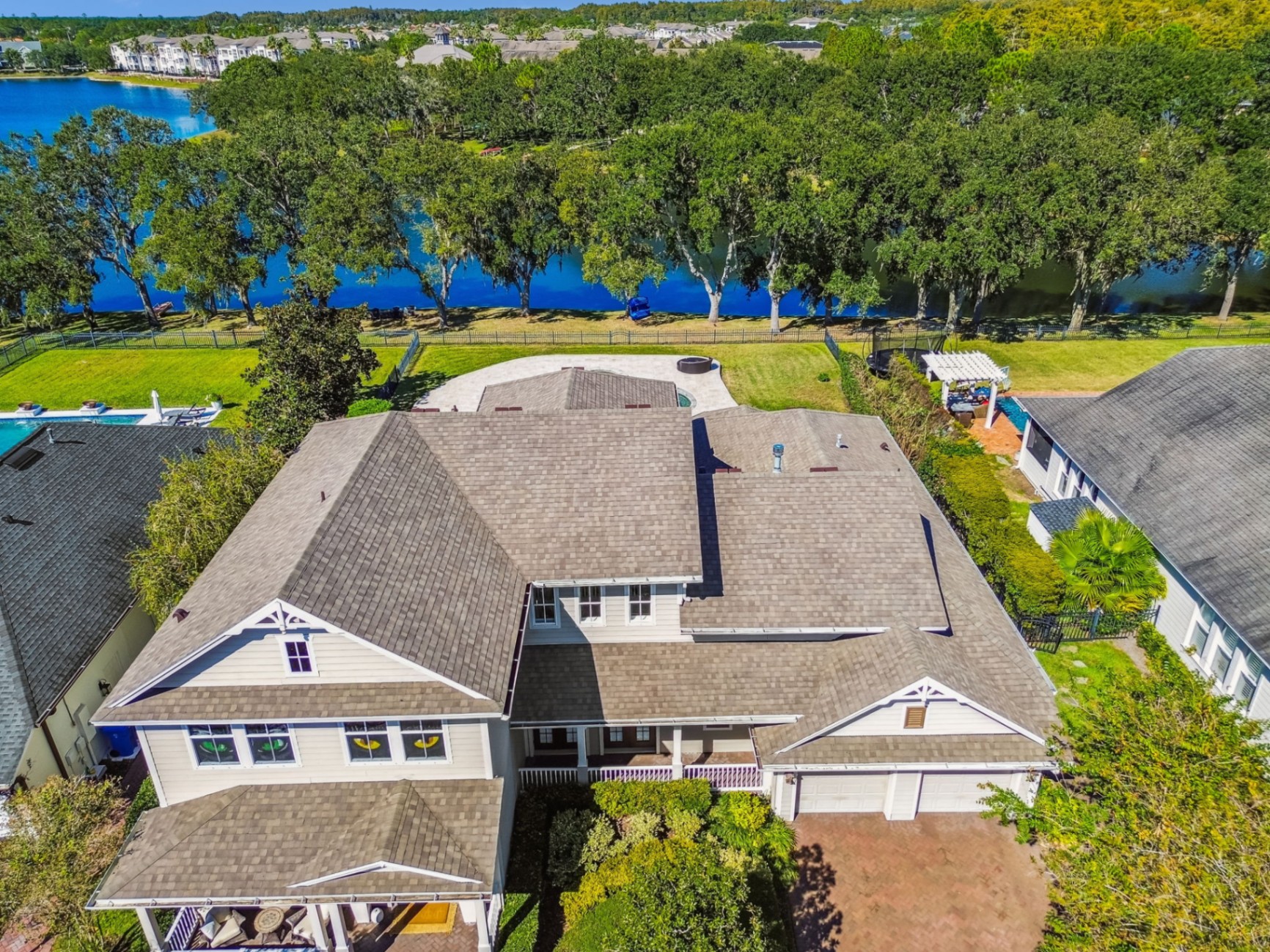
Roofing Materials: Which Is Right for Your Tampa Home?
Architectural Shingles
The most popular choice for Tampa Bay homeowners — and for good reason. Modern architectural shingles (like GAF Timberline HDZ) offer a dimensional appearance, 130+ mph wind ratings, and excellent value. They come in dozens of colors, carry strong manufacturer warranties, and are the fastest to install.
Best for: Budget-conscious homeowners, quick replacements, insurance claim projects, and most residential applications.
Standing Seam Metal Roofing
Metal roofing has surged in popularity across Tampa Bay for its longevity, energy efficiency, and hurricane performance. Standing seam panels interlock without exposed fasteners, providing superior water resistance. Metal roofs reflect solar heat, potentially reducing cooling costs 10–25% — a significant factor in Florida's climate.
Best for: Homeowners planning to stay long-term, those prioritizing energy savings, and homes in high-wind-exposure areas.
Concrete and Clay Tile
Tile roofing is deeply rooted in Florida's architectural heritage. Concrete tile is more affordable than clay and offers excellent durability. Clay tile provides an elegant, Old Florida aesthetic with exceptional longevity. Both are heavy — your home's structure must support the load, which may require engineering review.
Best for: Mediterranean-style homes, coastal properties, and homeowners seeking a premium, long-lasting aesthetic.
Flat Roof Systems (TPO/Modified Bitumen)
Many Tampa homes have flat or low-slope sections (lanai roofs, additions, commercial-style architecture). TPO and modified bitumen are the industry standards for these applications. Proper drainage design is critical in Florida's heavy rainfall conditions.
| Factor | Shingles | Metal | Tile |
|---|---|---|---|
| Upfront Cost | $$ | $$$$ | $$$–$$$$ |
| Lifespan | 20–30 years | 40–70 years | 40–100 years |
| Wind Resistance | 130+ mph | 140–180 mph | 150+ mph |
| Energy Efficiency | Moderate | Excellent | Good |
| Maintenance | Low | Very Low | Moderate |
| Weight | Light | Light | Heavy |
| Installation Time | 1–3 days | 3–5 days | 5–10 days |
| Insurance Discounts | Standard | Often Higher | Standard |
Need Help Choosing a Material?
Talk to a licensed Tampa Bay contractor — no obligation, no pressure.
Florida Building Code Requirements for Roofing
Florida has some of the strictest building codes in the nation — for good reason. Tampa Bay sits in a high-velocity hurricane zone, and our building codes are designed to protect homes and lives during severe weather. Here's what the code requires for roof replacement:
Key Code Requirements
- Permit required: All roof replacements must be permitted and inspected. No exceptions.
- Wind zone compliance: Materials and installation methods must meet the wind speed requirements for your specific location. Tampa Bay generally falls within the 130–150 mph design wind speed zone.
- Enhanced nail patterns: Florida requires 6-nail patterns for shingles in high-wind zones (most of the country uses 4-nail patterns).
- Underlayment: Self-adhering modified bitumen underlayment is required in the first 4–6 feet from all eaves and rakes (and sometimes the entire roof deck).
- Drip edge: Metal drip edge is required along all eaves and rakes.
- Deck attachment: If re-decking, 8d ring-shank nails at specified spacing are required for plywood attachment to trusses.
Why this matters to you: Code-compliant installation isn't just about passing inspection. It's what qualifies you for wind mitigation insurance discounts and ensures your roof performs when the next storm hits. Any contractor who suggests shortcuts on code compliance is putting your home — and your family — at risk.
Hurricane Wind Mitigation & Insurance Savings
One of the most significant financial benefits of a new roof in Florida is the wind mitigation inspection. After your roof is replaced to current code, a certified inspector evaluates your home's wind resistance features and issues a report. This report is sent to your insurance company and can reduce your homeowner's insurance premium by 20–45% annually.
What the Inspection Covers
- Roof covering type and FBC compliance
- Roof deck attachment method
- Roof-to-wall connection type
- Roof geometry (hip vs. gable)
- Secondary water resistance (SWR) barrier
- Opening protection (shutters/impact windows)
A new roof that meets current FBC standards typically scores well on most categories. Pair your new roof with impact windows and you can maximize your wind mitigation discount.
Maximize Your Insurance Savings
Talk to a licensed Tampa Bay contractor — no obligation, no pressure.
The Roof Replacement Process: Step by Step
Understanding what happens during a roof replacement helps you prepare and know what to expect. Here's our process from first call to final inspection:
Step 1: Free Inspection & Estimate
We perform a thorough roof inspection — climbing on the roof, checking the attic, documenting damage, and measuring. You receive a detailed written estimate with material options, not a ballpark guess.
Step 2: Material Selection
We review material options with you — color, style, performance ratings, warranty levels, and budget considerations. We use products from trusted manufacturers like GAF, Owens Corning, and Boral.
Step 3: Permit & Scheduling
We pull the building permit and coordinate material delivery. Once everything is approved and materials are on-site, we schedule your installation date.
Step 4: Tear-Off & Deck Inspection
Our crew removes all existing roofing material down to the decking. This is when we inspect every inch of plywood for rot, moisture damage, or structural issues. Damaged decking is replaced before new materials go on.
Step 5: Underlayment & Waterproofing
Self-adhering underlayment is installed per Florida Building Code — providing a secondary water barrier that protects your home even if shingles are blown off during a storm.
Step 6: Material Installation
Shingles, metal panels, or tile are installed according to manufacturer specifications and Florida Building Code requirements. Proper ventilation components (ridge vents, intake vents) are installed.
Step 7: Cleanup & Final Walkthrough
We remove all debris, run magnetic sweeps for nails, protect your landscaping, and perform a final walkthrough with you to review the completed work.
Step 8: County Inspection
The county building inspector visits to verify code compliance. Once passed, your permit is closed and your new roof is officially approved.
Timeline Breakdown
| Phase | Typical Duration |
|---|---|
| Inspection & Estimate | 1–2 days |
| Insurance Process (if applicable) | 2–6 weeks |
| Permit Approval | 3–10 business days |
| Material Ordering & Delivery | 3–7 business days |
| Installation (shingle roof) | 1–3 days |
| County Inspection | 2–5 business days |
| Total (non-insurance) | 2–4 weeks |
| Total (with insurance claim) | 4–10 weeks |
Insurance Claims for Roof Replacement in Florida
Storm damage is one of the most common reasons Tampa homeowners need a new roof. If your roof was damaged by a hurricane, strong winds, hail, or falling debris, your homeowner's insurance policy should cover replacement minus your deductible.
The Insurance Claim Process
- Document damage immediately: Take photos and videos of all visible damage from the ground. Do not climb on a damaged roof.
- Contact your insurance company: File a claim and request an adjuster inspection. Note your claim number.
- Get a professional inspection: Have a licensed contractor (like us) inspect your roof and provide a detailed scope of damage.
- Meet with the adjuster: Your contractor should be present to walk the adjuster through all identified damage.
- Review the insurance estimate: Compare the adjuster's estimate to your contractor's scope. Supplement if damage is missed.
- Approve the work and schedule: Once claim is approved, authorize your contractor to proceed.
- Final payment: Insurance typically pays in two disbursements — initial payment after approval, final payment after completion.
For more detail on the claims process, see our Tampa Storm Damage & Insurance Claim Guide.
Need Help With an Insurance Claim?
Talk to a licensed Tampa Bay contractor — no obligation, no pressure.
Roof Decking: The Hidden Cost Most Homeowners Don't Expect
Beneath your shingles sits plywood decking (usually 7/16" or 1/2" OSB or CDX plywood) that forms the structural base of your roof. In Florida's humid climate, decking is susceptible to moisture damage, especially around valleys, penetrations, and areas where underlayment has failed.
The reality: We find decking damage on the majority of roofs over 15 years old in Tampa Bay. This isn't something any contractor can fully assess until the old roofing material is removed. Reputable contractors will contact you during tear-off if unexpected decking replacement is needed, with per-sheet pricing agreed upon in advance.
Typical cost: $50–$80 per sheet of plywood replaced. Most homes need 3–15 sheets. Homes with severe water intrusion history may need significantly more.
Warranties: What You're Actually Getting
Manufacturer Warranty
Covers defects in the roofing material itself. GAF offers 25-year to lifetime limited warranties depending on the product line and installer certification level. Owens Corning has similar tiered programs.
Workmanship Warranty
Covers installation quality — this comes from your contractor. At Weathershield, we provide written workmanship warranties because we stand behind our installation. Ask any contractor for their warranty in writing before signing a contract.
What Voids a Warranty
- Improper ventilation (the most common cause)
- Unauthorized modifications or penetrations
- Lack of maintenance (clogged gutters, debris accumulation)
- Installation by non-certified contractors (for enhanced manufacturer warranties)
- Power washing (damages shingle granules)
For a clearer distinction between material, system, and workmanship coverage, read our roof warranty guide.
How to Choose a Roofing Contractor in Tampa
Choosing the wrong contractor is the single biggest risk in a roof replacement project. Tampa Bay, especially after storms, attracts out-of-state contractors and unlicensed operators. Protect yourself:
What to Verify
- Active Florida roofing license: Verify at myfloridalicense.com
- Local physical office: Not a P.O. box. A real address in Tampa Bay.
- Workers' compensation and liability insurance: Request certificates directly from their insurance company.
- Written contract with detailed scope: Materials, quantities, timeline, payment schedule, warranty terms.
- Permit responsibility: The contractor should pull the permit in their name.
- References and portfolio: Recent projects in your area with homeowner contact information.
- Google reviews: Look for consistent 4.5+ star ratings with detailed reviews, not just star counts.
Red Flags to Watch For
- Door-to-door solicitation immediately after storms
- Pressure to sign a contract or "assignment of benefits" on the spot
- Requesting full payment before work begins
- "We'll cover your deductible" — this is insurance fraud in Florida
- No written estimate or contract
- Out-of-state license plates on work trucks
- Cannot provide a local physical address
- Suggests skipping the permit process
Work With Tampa Bay's Trusted Contractor
Talk to a licensed Tampa Bay contractor — no obligation, no pressure.
Permit Requirements in Tampa Bay
Permits protect you. A permitted job is inspected by the county to verify code compliance — ensuring your roof will perform in a storm, qualify for insurance discounts, and not create liability issues when you sell your home.
Permit Process by Jurisdiction
- City of Tampa: Online permit portal. Typical turnaround 3–5 business days.
- Hillsborough County: Permits required for unincorporated areas. Similar timeline.
- Pinellas County (Clearwater, St. Pete): County permits with plan review for some applications.
- Pasco County (Wesley Chapel, Lutz): County permit required. Inspections within 24 hours of request.
Your contractor should handle the entire permit process. If a contractor asks you to pull the permit yourself, that's a red flag — homeowner-pulled permits may void your ability to make warranty claims and indicate the contractor may not be properly licensed.
What We Recommend for Homes in Tampa
After replacing hundreds of roofs across the Tampa Bay area, here is what we consistently recommend based on budget, home type, and long-term goals:
- Best value for most Tampa homes: GAF Timberline HDZ architectural shingles with full peel-and-stick underlayment and upgraded hurricane straps. This combination delivers strong wind resistance, a solid warranty, and the best wind mitigation credits for the price.
- Best for long-term homeowners: Standing seam metal roofing. Higher upfront cost, but it lasts 40 to 60+ years, handles Tampa's heat and storms better than any other material, and virtually eliminates future roof replacement concerns.
- Best for insurance savings: Any FBC-compliant roof with sealed deck, hip shape (if applicable), and hurricane straps. Pair it with impact windows in Tampa for maximum wind mitigation discounts.
- Best for HOA communities: Architectural shingles in an HOA-approved color profile. Check with your association before selecting a material. We handle HOA submissions for our clients.
Regardless of material, we always recommend combining your Tampa roof replacement with a post-project wind mitigation inspection and, if budget allows, siding upgrades to maximize your total insurance savings.
Get Expert Help for Your Tampa Home
If you're unsure what option is right for your home, our team can help you evaluate your roof, windows, or siding. We provide honest assessments with no obligation and no pressure.
Ready to Replace Your Roof?
A new roof protects your family, reduces your insurance costs, increases your home's value, and gives you peace of mind heading into every hurricane season. At Weathershield Construction, we make the process straightforward — honest inspections, clear pricing, quality materials, and clean job sites.
We serve homeowners across Tampa, Brandon, Clearwater, St. Petersburg, and communities throughout the Bay area. Every project starts with a free, no-obligation roof inspection.
If you are ready to discuss the full scope rather than continue general research, start with our Tampa roofing contractor page.